Developer Infrastructure · Database
Database capabilities for canisters — without losing determinism.
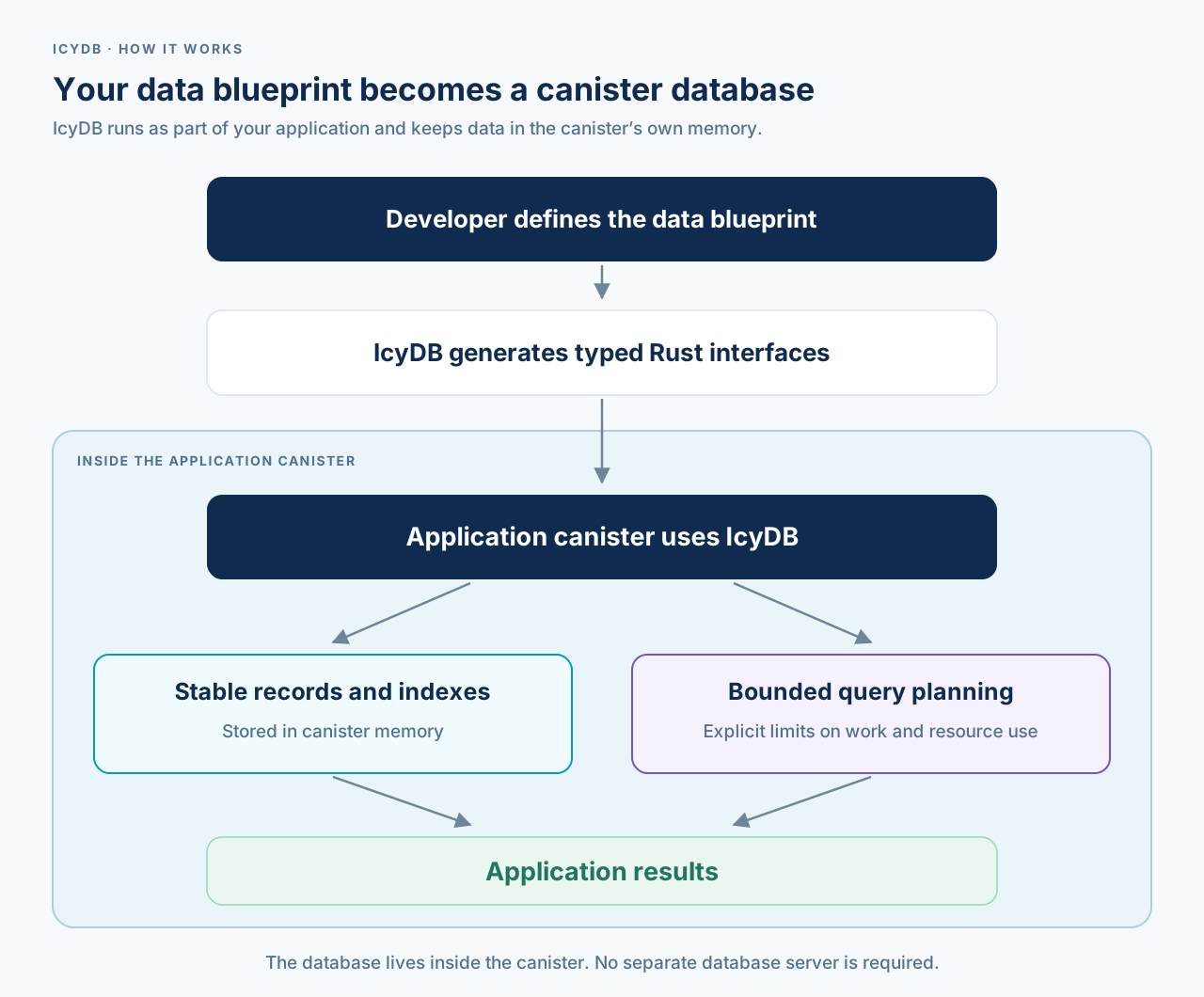
IcyDB is a schema-first persistence and query runtime for Internet Computer canisters. It gives Rust canisters typed entities, stable-memory storage, indexes, fluent queries, and a focused SQL surface, while keeping the security, determinism, and performance decentralized execution demands.
What it is
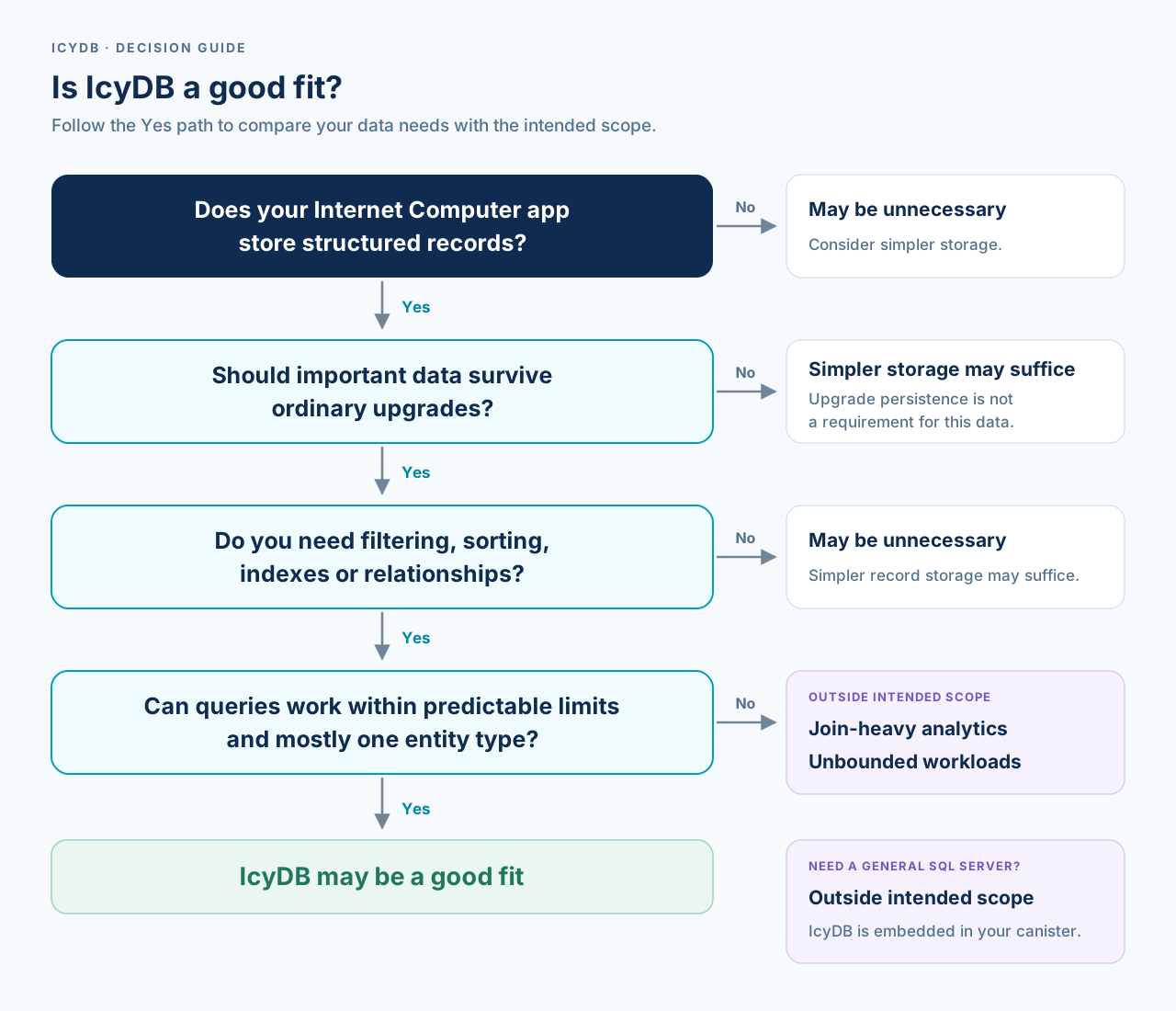
Canisters need structured data, but traditional databases bring joins, hidden execution, and unbounded queries that don't fit a deterministic, resource-metered runtime. IcyDB gives developers typed data models, indexing, querying, and aggregation backed by stable memory — deliberately avoiding joins, subqueries, and hidden plans in favour of bounded, single-entity query models.
Schema macros are the authority: accepted schema snapshots drive row layouts, index catalogs, reconciliation, SQL DDL, and observability. Primary keys can be scalar or composite, and strong relations are explicit and validated at write time.
Capabilities
Schema macros declare canisters, stores, entities, fields, indexes, enums, validators, sanitizers, and explicit relations.
Choose one explicit contract per store: durable stable, volatile heap, or journaled cached-stable.
Secondary, multi-field, unique, filtered, and deterministic expression indexes, with a fluent Rust query API.
SELECT, INSERT, UPDATE, DELETE, DDL, aggregates, and introspection — useful for canister-local reads and writes.
Continuation-based pagination and grouped aggregation with HAVING, CASE, and common scalar functions.
Generated observability endpoints, explain tooling, and metrics for deterministic planning and execution.
Query from Rust
The runtime prelude gives canister code a fluent, typed query builder. With the default sql feature, the same entity is also reachable through reduced single-entity SQL.
use icydb::prelude::*; pub fn top_users() -> Result<Vec<User>, icydb::Error> { db!() .load::<User>() .filter_eq("active", true) .order_desc("score") .limit(10) .entities() }
In scope
Out of scope by design
Explore the schema macros, SQL contract, and query practice docs on GitHub.