
Canic - run and manage applications across a fleet of canisters
RustOperator CLIcrates.io: canic-cliMIT licensed
What it is
On the Internet Computer, software runs inside little self-contained units called canisters - each one holds a piece of your app's code and its data. A real application is usually made of many of them working together. The catch is that someone then has to build them, wire them up, keep them topped up with fuel, put each one in the right place, watch over them, recover them if something breaks, and update them all without knocking the app over.
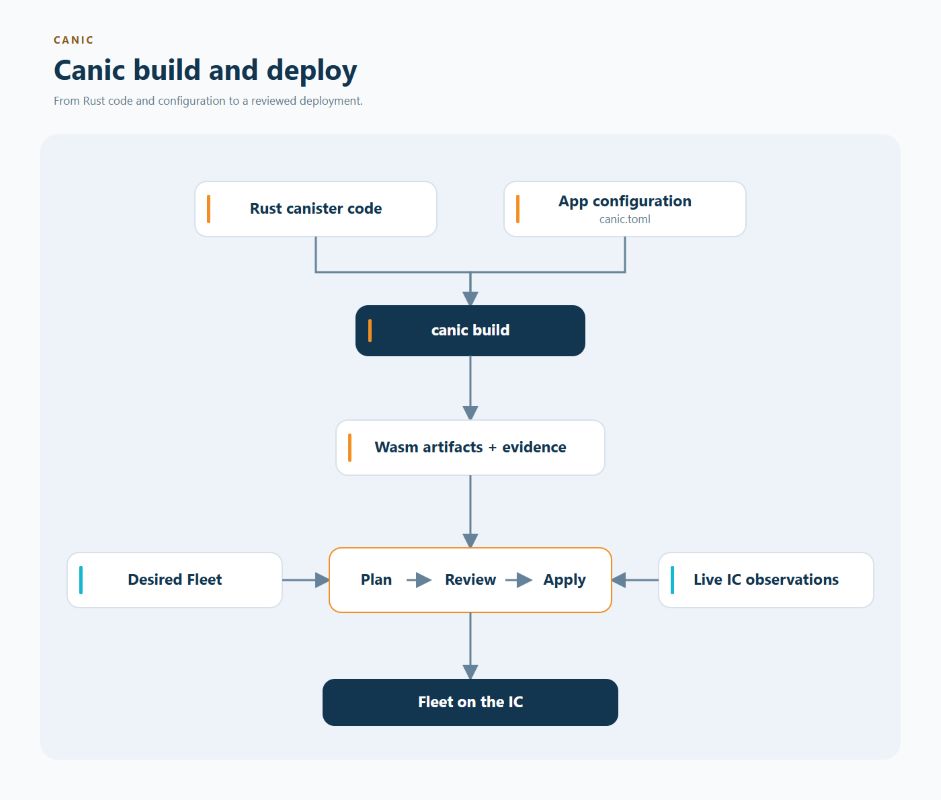
Canic takes care of all of that from one place. You describe what the app should look like; Canic works out what needs to change, shows you the plan before anything happens, and then makes it so - and keeps the whole thing running as a single system afterwards. In the ordinary cloud, big companies use a tool called Kubernetes to manage huge fleets of servers this way; Canic is, in effect, decentralised Kubernetes - that same role, built for the Internet Computer.
How it works
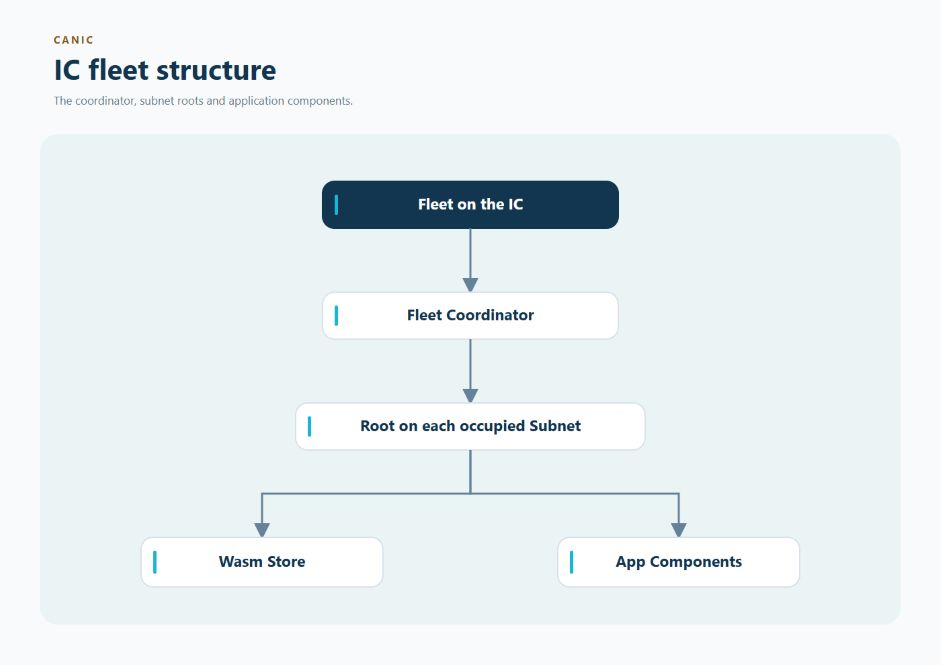
You describe the app and build it, Canic checks its plan against what's really running, then rolls it out - and looks after all the parts together as one system.
Who it's for
Canic runs the canister fleets behind our own platform and games, which is how its rough edges get found and fixed. It's open-source and being opened up for wider use - full documentation lives on GitHub.